Suburb Investment Report
Leppington, New South Wales
Leppington Suburb Investment Report
TopBuyers Research Team · Published 7 June 2026 · Last reviewed June 2026
Leppington is one of Sydney’s fastest-growing new suburbs, a major greenfield housing release in the south-west growth corridor, about 45 km from the Sydney CBD on the edge of the Western Sydney Aerotropolis. Once semi-rural, it has been transformed by master-planned estates and the opening of Leppington train station on the T2 line. This report assesses pricing, rental metrics, the suburb profile and practical investment positioning for buyers evaluating Leppington in 2026.
Median House Price
Median Unit Price
House Gross Yield
Unit Gross Yield
5yr House Growth (LGA)
Vacancy Rate
Overview
Leppington is almost entirely a house market — new detached homes and house-and-land packages account for virtually all sales, with only a handful of unit transactions a year. As a greenfield growth suburb it offers relatively new, large family homes with house rental yields (~3.3%) that are stronger than most established Sydney suburbs, though recent prices have been volatile as heavy new supply works through the corridor.
The current median house price is around $1,020,000, with median house rent near $800 per week and a gross rental yield of about 3.3 percent — solid for a Sydney house market. The unit segment is negligible (only a couple of sales a year), so Leppington is effectively a house-only market. Recent annual price movement has been soft to negative as new supply has weighed on values, even as rents and yields have held up.
For most investors, the practical takeaway is straightforward: houses are better suited to long-term capital growth if budget permits, while units make more sense for affordability and yield. Better-performing properties are still likely to be those close to transport, shopping, schools and employment corridors rather than simply any property within the postcode.
Market Data
| Metric | Houses | Units |
|---|---|---|
| Median price | $1,020,000 | Very limited stock |
| Annual growth | ~ -5% (1yr, houses) | 1.0% |
| Median rent | $800/week | ~$530/week |
| Gross rental yield | 3.3% | ~4.2% |
| Recent sales volume | ~421 sales/yr | ~2 sales/yr |
Source: Domain & realestate.com.au suburb data, as at June 2026. Figures are medians and may revise as new sales settle.
Leppington’s sales are almost entirely houses — roughly 421 house sales a year versus only about 2 units — reflecting an estate-driven, detached-home built form with virtually no apartment stock. The market is therefore best understood purely as a house-and-land play; there is no meaningful unit segment to consider.
Leppington’s defining feature is explosive growth: the population rose about 169% between 2016 and 2021 (from ~3,500 to ~9,400) and has kept climbing as estates complete. This is driven by continuous master-planned land release, the Leppington train station and the suburb’s position at the gateway to the Western Sydney Aerotropolis. That pipeline supports long-term demand, but heavy ongoing supply can also depress short-term prices and lift vacancy — recent values have been soft for exactly this reason.
Suburb Profile & Demographics
Leppington functions as a fast-emerging family suburb rather than an established centre, which shapes its investment profile. It is anchored by Leppington train station, master-planned residential estates, new schools and its position at the gateway to the Western Sydney Aerotropolis — all attracting young, growing families seeking newer, larger homes.
| Demographic (2021 Census) | Leppington (suburb) |
|---|---|
| Population | 9,423 (2021; rapidly rising) |
| Median age | 32 years |
| Families | 2,564 |
| Avg. household size | 3.2 people |
| Median weekly household income | $2,275 |
| Median weekly rent | $550 |
| Dwelling mix | Overwhelmingly new detached houses |
| Tenure | ~72% owner-occupied · ~28% rented/other |
Source: 2021 Census of Population and Housing (Leppington suburb, SAL12314). As a high-growth greenfield area the population has risen sharply since 2021 (up about 169% between 2016 and 2021 and still climbing), so current figures will differ materially.
The numbers describe a young, family-heavy, owner-occupier market: a median age of 32, large households (3.2 people), above-average incomes and a very high owner-occupier share of around 72%. Leppington is highly multicultural, with large South Asian and other migrant communities. For investors, this means strong demand for larger family homes, but a thinner rental pool than tenant-heavy suburbs — most buyers here are owner-occupiers, not renters.
Infrastructure & Transport
Leppington is served by Leppington train station on the T2 line, with road links via the M5/M7 region, and major road upgrades underway to support the growth corridor. Its biggest long-term driver is proximity to the new Western Sydney International Airport and the surrounding Aerotropolis employment area, alongside new schools and community facilities rolling out across the estates. Established retail and amenity remain limited for now and are still catching up with the pace of housing.
How Leppington Compares
Leppington is a new, almost entirely house-based growth-corridor suburb offering relatively affordable modern homes with solid yields. The table below benchmarks it against nearby and comparable suburbs covered on TopBuyers.
| Suburb | Median (indicative) | Report |
|---|---|---|
| Leppington | $1,020,000 house · units negligible | This report |
| Marsden Park | $1,195,000 house · $720,000 unit | View → |
| Liverpool | $1,200,000 house · $520,000 unit | View → |
| Blacktown | $1,175,000 house · $517,000 unit | View → |
| Penrith | $1,100,000 house · $590,000 unit | View → |
Indicative medians for comparison only; see each suburb report for the full figures and basis. Verify against your live data before publishing.
Leppington in Pictures
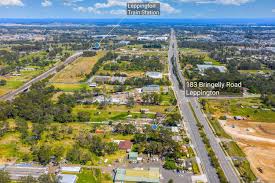
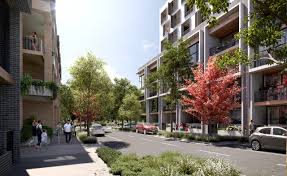
A snapshot of Leppington — new master-planned housing estates, Leppington train station, and a typical new-build streetscape.

SWOT Analysis
Strengths
- One of Sydney’s fastest-growing suburbs, with sustained population and housing demand.
- Newer, larger homes at an accessible price with solid house yields (~3.3%) and depreciation benefits.
- Leppington train station plus gateway position to the Western Sydney Aerotropolis.
- Young, high-income family demographic and very high owner-occupier share.
Weaknesses
- Recent house prices have been soft to negative as heavy new supply works through the corridor.
- Continuous greenfield land release can cap short-term capital growth and add competing new stock.
- Limited established retail and amenity, and a near-zero unit market means a single, narrow asset class.
Opportunities
- Proximity to the Western Sydney Airport and Aerotropolis may lift long-term employment and demand.
- As land release slows and the area matures, established homes may benefit from scarcity relative to new stock.
- New houses offer strong tax-depreciation benefits and appeal to family renters near the station.
Threats
- Oversupply of new house-and-land stock can keep depressing prices and lifting vacancy during heavy release phases.
- Rising rates and high household debt can pressure a young, highly mortgaged buyer base.
- Buying new at a premium risks limited near-term growth while comparable stock keeps coming to market.
Buyer Strategy
Growth-focused buyer. In a greenfield suburb still absorbing supply, prioritise land content and location over a brand-new build — established homes on larger blocks near the station and finishing estates tend to outperform once release slows. Be patient and disciplined on price; recent softness means there is no need to overpay for new stock that newer releases will undercut.
Yield-focused buyer. Leppington’s houses offer solid yields (~3.3%) for a Sydney house market, backed by family-rental demand, and new homes add depreciation benefits that improve after-tax returns. With essentially no unit market, focus on family-friendly houses near the station and schools, and factor in the thinner rental pool created by the very high owner-occupier share.
Balanced buyer. Consider established (not brand-new) family houses or townhouses near the station, schools and completed estates, balancing reasonable yield with longer-term growth as the area matures. Favour completed pockets with proven amenity over still-releasing land, and avoid stock that competes directly with ongoing new supply.
Due Diligence Checklist
- Compare the target property against recent nearby comparable sales.
- Review flood, zoning and planning overlays where relevant.
- Check rail, bus, school and shopping access in walk or short-drive terms.
- For units, inspect strata levies, sinking-fund health, defect history and owner-occupier ratio.
- Validate rent assumptions using current leasing stock, not only historical median rent figures.
Investment View
Leppington is a genuine growth-corridor opportunity, but a greenfield, house-only one that rewards timing and location discipline. The strongest case is for investors and owner-occupiers wanting newer, larger family homes with solid yields and depreciation benefits, who understand that ongoing land supply has weighed on recent prices and can keep doing so.
Because there is effectively no unit market, this is a house-and-land decision. Favour established homes on good land near the station and finishing estates over new builds carrying a developer premium, buy with discipline given recent price softness, and plan for a longer hold so the area can mature and supply can absorb.
On balance, Leppington suits investors and owner-occupiers who want an affordable, modern, family-oriented home in a high-growth corridor and are comfortable with greenfield supply risk and recent price volatility. The population growth, train station and Aerotropolis pipeline are strong long-term positives, but returns depend heavily on buying the right location at the right point in the release cycle rather than the headline median.
Frequently Asked Questions
Is Leppington a good place to invest?
Leppington is one of Sydney’s fastest-growing suburbs, offering newer, larger family homes at an accessible price with solid house yields (~3.3%), a train station and a gateway position to the Western Sydney Aerotropolis. It suits growth-corridor investors who are comfortable with greenfield supply risk and recent price volatility.
What is the median house price in Leppington?
The median house price in Leppington is around $1,020,000. The suburb is almost entirely houses — there are only a couple of unit sales a year — so it is effectively a house-and-land market (Domain & realestate.com.au, June 2026).
What rental yield can investors expect in Leppington?
Houses return a gross yield of about 3.3% — solid for a Sydney house market — with median house rent near $800 per week. New homes also offer tax-depreciation benefits that improve after-tax returns.
Why have Leppington house prices fallen recently?
Recent annual price movement has been soft to negative, largely because heavy new house-and-land supply across the growth corridor has outpaced demand at times. Rents and yields have held up better than prices, and the long-term demand pipeline remains strong.
What infrastructure serves Leppington?
Leppington has its own train station on the T2 line, with road upgrades underway, new schools and community facilities, and a key gateway position to the new Western Sydney International Airport and Aerotropolis employment area.
Should I buy new or established in Leppington?
New builds offer depreciation benefits and low maintenance but carry a premium and compete with ongoing supply — a real risk given recent price softness. Established homes on larger blocks near the station and finishing estates often offer better long-term value once land release in the area slows.
Buying in Leppington?
Connect with experienced buyer agents who specialise in the Leppington and south-west growth-corridor market.
Market figures are point-in-time estimates and should be verified against current source data before making any purchase decision. This report is general information, not financial or investment advice.
Buying in Leppington, New South Wales?
Connect with buyer agents who specialise in this market.
Find local agents